

/
Reggae Artists
Any reggae artists guide has to start with Ska and Rocksteady. These were the original Jamaican sounds that paved the path for reggae in the late 1960s.
Influential individuals like Bob Marley helped the genre become well-known by using it as a platform for social reform and unity. Its themes of resistance, love, and tenacity struck a chord with people everywhere.
Thanks to modern musicians who are pushing the boundaries and the pioneering Jamaican artists who laid the foundation for the genre, reggae is still thriving today.
Whether you’re looking for the best reggae artists of all time, well-known reggae vocalists who helped create the genre, or up-and-coming reggae performers shaping its future, this guide has it covered.
Reggae Artists
Any reggae artists guide has to start with Ska and Rocksteady. These were the original Jamaican sounds that paved the path for reggae in the late 1960s.
Influential individuals like Bob Marley helped the genre become well-known by using it as a platform for social reform and unity. Its themes of resistance, love, and tenacity struck a chord with people everywhere.
Thanks to modern musicians who are pushing the boundaries and the pioneering Jamaican artists who laid the foundation for the genre, reggae is still thriving today.
Whether you’re looking for the best reggae artists of all time, well-known reggae vocalists who helped create the genre, or up-and-coming reggae performers shaping its future, this guide has it covered.


The Origins of Reggae Music
Reggae originated in Jamaica in the late 1960s, evolving from ska and rocksteady. Because of its contagious rhythms, socially aware lyrics, and strong spiritual ties to Rastafarian history, the music became well-known throughout the world.
Reggae bands and musicians from all over the world are still carrying on the tradition today. Mad Collective Connection (MCC), which blends classic reggae rhythms with a contemporary, multicultural twist, enthusiastically embraces its heritage.
The Best Reggae Artists of All Time
When it comes to the top reggae artists in history, these names stand out:

1. Bob Marley & The Wailers
Born Robert Nesta Marley in the rural village of Nine Mile, Jamaica, in 1945, he grew up in modest circumstances with his mother, Cedella.
As a teenager, Marley moved to the tough Trenchtown district in Kingston. There, he immersed himself in the growing sound system culture that shaped modern Jamaican music.
He formed The Wailers in the early 1960s with Peter Tosh and Bunny Wailer and began recording ska and rocksteady tracks before evolving into the deeper, spiritually infused sound of reggae.
Marley’s voice was soaring yet raw. His message of resilience, love, and resistance gave his music a universal appeal that crossed cultural and language barriers. His mix of roots reggae rhythms with Rastafari beliefs turned him into a cultural icon and a global messenger for peace and justice.
Why He Matters
Bob Marley’s legacy cannot be overstated. He was not simply a musician but a revolutionary artist who gave voice to the struggles of the poor and oppressed. His songs like “Get Up, Stand Up” and “War” were rallying cries for resistance against oppression, while tracks such as “One Love” and “Redemption Song” embodied his belief in unity and freedom. Marley also bridged the gap between music and politics, famously bringing rival Jamaican leaders Michael Manley and Edward Seaga together on stage during the 1978 One Love Peace Concert in an effort to quell political violence. Internationally, Marley introduced millions to reggae, Rastafarianism, and the broader fight for African identity and liberation. Even decades after his death in 1981, his influence persists—his posthumous compilation Legend remains the best-selling reggae album in history, ensuring that new generations continue to discover his message of love and revolution.
Essential Albums
- Catch a Fire (1973): The Wailers’ international breakthrough, polished by Island Records but still carrying raw energy, it established Marley as a force on the global stage.
- Rastaman Vibration (1976): A politically charged album that solidified Marley’s reputation as a revolutionary voice, featuring anthems of spiritual resilience.
- Exodus (1977): Recorded during Marley’s self-imposed exile in London after an assassination attempt, this album blends politics with uplifting tracks like “Jamming” and “Three Little Birds.” It was later named Album of the Century by Time magazine.
- Legend (1984): The definitive Bob Marley collection, this greatest-hits album continues to introduce countless listeners to his music worldwide.
Key Tracks
- “No Woman, No Cry”
- “Redemption Song”
- “One Love / People Get Ready”
- “Buffalo Soldier”
- “Get Up, Stand Up”
- “Could You Be Loved”
2. Peter Tosh – The Stepping Razor of Reggae
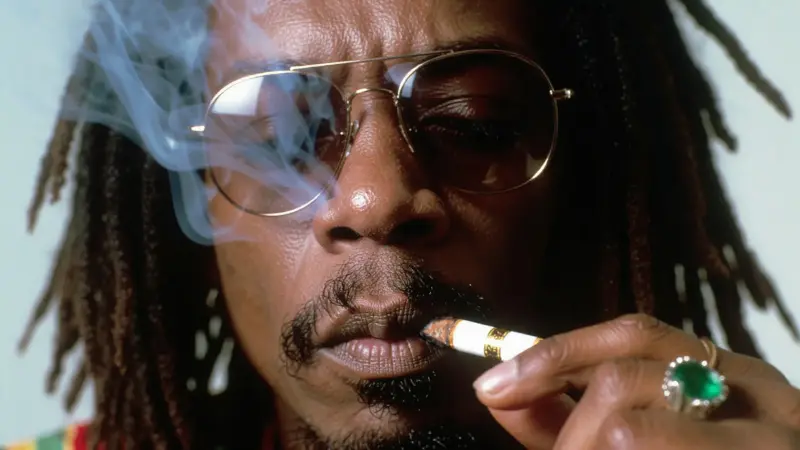
Peter Tosh was more than just a member of The Wailers; he was reggae’s fierce rebel.
Born Winston Hubert McIntosh in 1944 in Westmoreland, Jamaica, Tosh grew up with a strong sense of independence that would later shape his music and activism.
Orphaned at a young age, he taught himself to play guitar by observing others and developed a style based on determination and self-reliance.
After moving to Kingston, he met Bob Marley and Bunny Livingston (later known as Bunny Wailer). Together, they formed The Wailers and laid the groundwork for modern reggae.
While Marley had a warm, universal voice, Tosh’s delivery was raw, militant, and sharp, earning him the nickname “The Stepping Razor.”
His solo career in the mid-1970s showcased his true vision: reggae as a tool for resistance, filled with social critique, spiritual depth, and bold demands for justice.
Why He Matters
Tosh stood out in reggae because he never softened his message to gain mainstream acceptance. While Marley often framed resistance with hope and unity, Tosh spoke out boldly, directly addressing oppression, colonialism, and hypocrisy. He advocated for the legalization of marijuana, seeing it as both a cultural and political issue—he viewed ganja as a sacred right of Rastafari and a means of liberation. In his groundbreaking 1976 album, Legalize It, Tosh boldly challenged both Jamaican authorities and international stigmas, solidifying his position as reggae’s truth-teller. His music also tackled apartheid, systemic racism, and poverty. Songs like “Equal Rights” and “Downpressor Man” remain powerful anthems of defiance. Although his life ended tragically when he was murdered in 1987, Tosh’s unwavering insistence on dignity and justice cements his place as one of reggae’s most significant revolutionaries. His legacy lives on in his music and in the larger movements for equality and liberation that continue to draw inspiration from him.
Essential Albums
- Legalize It (1976): Tosh’s bold solo debut mixes militant advocacy with deep reggae grooves, featuring the lasting anthem “Legalize It.”
- Equal Rights (1977): A powerful statement against oppression, apartheid, and inequality; this album is widely recognized as his masterpiece.
- Bush Doctor (1978): Featuring international guest artists like Mick Jagger, this album broadened Tosh’s reach while maintaining his edge.
- No Nuclear War (1987): His final studio album, released shortly before his death, addresses global political issues with urgency.
Key Tracks
- “Legalize It”
- “Equal Rights”
- “Downpressor Man”
- “Stepping Razor”
- “Maga Dog”
- “Johnny B. Goode” (reggae cover of Chuck Berry classic)
3. Burning Spear – The Voice of Rastafari and Roots Reggae
Few reggae artists embody the essence of Rastafari quite like Burning Spear. Born Winston Rodney in 1945 in St. Ann’s Bay, Jamaica—the same place that gave us legends like Marcus Garvey and Bob Marley—he was raised in an environment rich with music and the powerful teachings of Black pride and self-determination. When he chose the name Burning Spear, it was more than just a stage name; it was a bold statement. A spear ignites when it moves swiftly, and his music aimed to cut through apathy with passion and purpose.
His early recordings with Coxsone Dodd at Studio One in the late 1960s were subtle yet impactful. The tracks leaned more towards trance-like chants and Nyabinghi drumming rather than catchy pop melodies. While some listeners might have found the repetition a bit much, others—especially those immersed in Rastafari culture—perceived it as a form of ritual, almost sacred. Over the years, Spear has steadfastly resisted the temptation to commercialize his sound, remaining true to roots reggae even as the music industry evolved around him.
Why He Matters
Burning Spear is often seen as reggae’s prophet, and while that title might feel a bit weighty, it’s pretty accurate. He transformed music into a space for liberation, especially with powerful tracks like “Marcus Garvey” and “Slavery Days.” These songs didn’t just entertain; they served as reminders of a history that’s often overlooked or forgotten. Unlike Marley or Tosh, who embraced global fame, Spear seemed more comfortable away from the limelight. His concerts felt less like performances and more like spiritual gatherings, leaving audiences sweaty, uplifted, and deep in thought. Some might argue that this approach limited his mainstream appeal, but it also helped him maintain his authenticity. Plus, he snagged multiple Grammys along the way—proof that you can stay true to your values and still earn recognition.
Essential Albums
- Marcus Garvey (1975) – Revolutionary urgency with Jack Ruby’s production.
- Garvey’s Ghost (1976) – Dub reimagined as a meditative soundscape.
- Man in the Hills (1976) – Gentle, pastoral themes of country life and faith.
- Hail H.I.M. (1980) – Spiritual identity and resistance at the forefront.
- Living Dub Vol. 1 & 2 (1979/1980) – Minimalist, hypnotic, deeply roots.
Key Tracks
- “Marcus Garvey”
- “Slavery Days”
- “Man in the Hills”
- “Columbus”
- “Jah Nuh Dead”
- “African Postman”
4. Dennis Brown – The Crown Prince of Reggae
Dennis Brown, affectionately known as the “Crown Prince of Reggae,” truly earned that title. Born in Kingston in 1957, he was already hitting the stage by the age of 11—while most kids were still trying to master cricket! His breakout hit, “No Man Is an Island,” recorded for Studio One, showcased his extraordinary talent. With a voice that could easily stand shoulder to shoulder with American soul legends yet deeply rooted in Jamaican rhythms, Brown became one of reggae’s most cherished icons.
Throughout the ’70s and ’80s, he released albums at an astonishing rate. Some critics might say that the sheer number of releases led to some inconsistency, but his standout tracks were packed with emotional depth. His knack for seamlessly transitioning between politically charged anthems and heartfelt love songs allowed him to connect with a diverse audience both locally and internationally.
Why He Matters
Brown was more than just a singer—he was a connector. Tracks like “Westbound Train” and “Revolution” resonated with themes of resilience and struggle, while “Love Has Found Its Way” captured the essence of romance. His lovers rock contributions, especially in the UK, helped shape an entire reggae subculture. Unlike Marley or Spear, Brown didn’t often present himself as a prophet or revolutionary figure. Instead, he spoke directly to the everyday experiences of life: love, heartbreak, and the quest for dignity.
Though his life was tragically cut short in 1999 at just 42, he left behind a legacy that inspired countless artists—Gregory Isaacs, Luciano, and many others. His absence is still felt in the reggae community today.
Essential Albums
- No Man Is an Island (1970) – An extraordinary debut from a 12-year-old.
- Visions of Dennis Brown (1978) – Socially conscious, beautifully produced.
- Words of Wisdom (1979) – Featuring “Money in My Pocket,” a crossover hit.
- Love Has Found Its Way (1982) – Lovers rock at its smoothest.
- The Crown Prince of Reggae: Singles 1972–1985 – A wide-ranging collection.
Key Tracks
- “No Man Is an Island”
- “Westbound Train”
- “Money in My Pocket”
- “Love Has Found Its Way”
- “Revolution” • “Here I Come”
5. Jimmy Cliff – The Reggae Pioneer Who Opened the World’s Ears
Jimmy Cliff might not carry the same “legend” title as Marley, but without him, reggae could have struggled to find its way to a global stage. Born James Chambers in 1944, Cliff spent his early years in rural Jamaica before heading to Kingston to pursue his music dreams. He made a splash early on with “Hurricane Hattie,” but it was his role in film that truly launched him into the international spotlight.
When he starred in The Harder They Come (1972), Cliff gave reggae a cinematic and cultural moment that echoed around the world. The film’s soundtrack—still hailed as one of the best reggae albums ever—featured his voice alongside other Jamaican legends, reaching audiences far and wide.
Why He Matters
Cliff was never one to shy away from breaking barriers. His songs, like “You Can Get It If You Really Want” and “Many Rivers to Cross,” resonate with universal themes of struggle and resilience. While some purists criticized him for mixing reggae with pop and soul, that very versatility is what made him a true ambassador for the genre. Unlike many artists who fade away after their prime, Cliff has stayed relevant, even snagging a Grammy in 2010 for Rebirth, which was produced by punk rocker Tim Armstrong.
Essential Albums
“Wonderful World, Beautiful People”
Harder They Come (1972) – The soundtrack that put reggae on the map.
Wonderful World, Beautiful People (1969) – Hopeful, wide-reaching.
Follow My Mind (1976) – Soul and reggae intertwined.
Special (1982) – Featuring “Reggae Night.”
Rebirth (2012) – Late-career brilliance.
Key Tracks
“The Harder They Come”
“You Can Get It If You Really Want”
“Many Rivers to Cross”
“Sitting in Limbo”
“Reggae Night”
6. Gregory Isaacs – The Cool Ruler of Reggae
Gregory Isaacs didn’t earn the nickname “Cool Ruler” by chance. Born in Kingston in 1951, he had a voice that could effortlessly glide from silky smoothness to streetwise grit, often within the same track. He kicked off his career in the late 1960s with duets and minor singles before going solo, and by the mid-1970s, he had become the face of lovers rock. While Burning Spear might have been all about chanting history, Isaacs drew you in close, singing about love and longing with a blend of charm and vulnerability that truly set him apart.
What’s really intriguing is just how prolific he was. Some estimates suggest he released over 500 albums—an almost unbelievable figure. Sure, not every single one was a masterpiece; the sheer quantity sometimes led to uneven production and a bit of repetition. But when Isaacs was at his best, he could create songs that still resonate today.
Why He Matters
Isaacs carved out a niche for romance in reggae without completely losing touch with his roots. His most famous track, “Night Nurse,” is often seen as a sensual anthem, but songs like “Slave Master” proved he wasn’t shy about tackling social issues. That balance—seduction on one side and rebellion on the other—added surprising depth to his work.
Beyond the music, Isaacs was a style icon. With his pressed suits, hat tilted just right, and that effortless coolness, he didn’t just sing lovers rock; he embodied it. At the same time, his battles with health and personal issues were well-known, sometimes overshadowing his artistry in the public eye. Yet, despite those struggles, he remained a beloved figure. He was one of the rare artists who could perform for a hardcore roots crowd and a lovers rock dance in the same week.
By the time he passed away in 2010, Isaacs had transformed from a singer into a symbol—someone who kept lovers rock alive while still holding onto his roots credibility. His legacy continues to resonate in reggae ballads and even in modern dancehall tunes.
Essential Albums
“Love Is Overdue”
Night Nurse (1982) – Smooth, sensual, and politically sharp at moments.
Cool Ruler (1978) – The album that confirmed his moniker.
Soon Forward (1979) – Balances tenderness with deeper roots vibes.
More Gregory (1981) – A lovers rock set dripping with feeling.
Key Tracks
“Night Nurse”
“Cool Down the Pace”
“Slave Master”
“Tune In”
7. Toots & The Maytals – The Soul of Ska and Reggae
If reggae has a voice that embodies raw power infused with a gospel spirit, it’s undoubtedly Toots Hibbert. Born Frederick “Toots” Hibbert in May Pen, Jamaica, in 1942, he grew up singing in church, which explains why his vocals always carried that preacher’s urgency—equal parts gravel and grace. In the early 1960s, he formed The Maytals, and together they became one of the few groups to navigate all of Jamaica’s early styles: ska, rocksteady, and eventually reggae.
But The Maytals weren’t just passengers on this musical journey; they played a pivotal role in shaping its direction. Their 1968 hit “Do the Reggay” is often credited with giving the genre its very name. Unlike some artists whose early hits now feel like relics, The Maytals’ classics—“Pressure Drop,” “Monkey Man,” “54-46 That’s My Number”—still resonate with infectious energy decades later.
Why They Matter
Toots wasn’t merely a singer; he was a powerhouse. His stage presence could transform a festival into a revival meeting. Fans recall how he would roam the stage, arms wide open, making everyone feel like they were part of something much larger than just a concert. That’s a rare gift.
Musically, the group blurred the lines. Their gospel roots lent an unusual warmth to their songs, while their lyrics—sometimes playful, sometimes politically charged—carried significant weight. Take “Pressure Drop,” for example; it has been reinterpreted as everything from a cautionary tale to an anthem of karmic justice. Punk bands like The Clash embraced it, introducing it to a whole new audience.
Of course, not everyone was on board with Toots’ genre-blending approach. Purists sometimes felt that his upbeat, soulful style softened reggae’s more hard-hitting political edge. Yet, that very versatility is what made him accessible to fans around the globe. By the time he snagged a Grammy for Toots in Memphis in 1988, he had shown that reggae could stand proudly alongside soul and R&B without losing its core essence.
His passing in 2020 was a profound loss. It marked the end of an era for one of the genre’s founding voices, but his songs continue to feel vibrant and alive.
Essential Albums
- Funky Kingston (1973) – A groove-heavy fusion of reggae, funk, and soul.
- Reggae Got Soul (1976) – Showcasing Toots’ crossover reach.
- Monkey Man (1970) – Bursting with early Maytals energy.
- Toots in Memphis (1988) – Grammy-winning, bridging reggae and American soul.
Key Tracks
“Reggae Got Soul”
“Pressure Drop”
“Monkey Man”
“Do the Reggay”
“54-46 That’s My Number”
8. Culture – The Voice of Roots and Spiritual Resistance
Culture wasn’t just another reggae trio; they brought a sense of urgency that made their music feel prophetic. Formed in Kingston in 1976, the group—led by Joseph Hill along with Albert Walker and Kenneth Dayes—quickly earned a reputation for their uncompromising style. Their debut album, Two Sevens Clash, wasn’t merely a record; in Jamaica, it was almost seen as a warning. The title track foretold chaos when the “sevens” converged in 1977, and many on the island took it to heart.
Joseph Hill’s voice served as the anchor. High-pitched, urgent, and sometimes wavering, it sliced through the mix with a pleading intensity. Paired with the trio’s haunting harmonies, Culture’s songs often felt less like entertainment and more like messages—almost like sermons—from the Rastafari perspective.
Why They Matter
Two Sevens Clash is still regarded as one of the most vital reggae albums ever made. What’s remarkable is how it transcended boundaries. While rooted Jamaicans heard apocalyptic prophecies, punk fans in the UK embraced it as a soundtrack for resistance. This dual audience speaks volumes about Culture’s influence: they never diluted their message, yet the conviction in their music resonated far beyond its original context.
Over the years, Hill kept the spirit of Culture alive. Albums like International Herb and Cumbolo carried the same spiritual and political weight, even if they didn’t quite match the impact of their debut. After Hill’s passing in 2006, his son Kenyatta took the reins—a move that some embraced as a continuation, while others viewed it as imitation. Regardless, the group’s legacy was already firmly established.
Critics sometimes claim that Culture’s music could be overly repetitive, relying too much on similar rhythms and themes. But for their fans, that consistency was the essence: a steady drumbeat of prophecy and resistance that never faltered.
Essential Albums
- Two Sevens Clash (1977) – Apocalyptic and prophetic, a classic.
- International Herb (1979) – Rich with Rastafari wisdom.
- Cumbolo (1979) – Deep roots, recorded at Harry J’s.
- Wings of a Dove (1984) – A lighter touch but still true to form.
Key Tracks
- “Two Sevens Clash”
- “International Herb”
- “I’m Not Ashamed”
- “Jah Rastafari”
“See Them a Come”
9. Black Uhuru – The Warriors of Modern Roots Reggae
Black Uhuru was never just another reggae band; they represented a real evolution in sound and style. Formed in Kingston back in 1972, the group experienced a few lineup changes before finally settling on the iconic trio of Michael Rose, Puma Jones, and Duckie Simpson in the late ’70s. That’s when everything really came together.
With the legendary producers Sly & Robbie at the helm, Black Uhuru crafted a tougher, more futuristic take on roots reggae. Their music featured heavy basslines, sharp drum machines, and even some synthesizer elements, giving it a darker, more cutting edge. For some fans, this modern twist was an exciting leap forward; for others, it felt like reggae was losing its raw, organic essence. But there’s no denying that this innovation set them apart during a time when dancehall was starting to take over Jamaica’s music scene.
Why They Matter
Black Uhuru broke new ground. In 1985, they made history as the first reggae group to win a Grammy, taking home the award for their album “Anthem.” That victory didn’t just celebrate the band—it marked a moment that roots reggae, even with its fresh sounds, still had a powerful presence on the global stage.
Tracks like “Guess Who’s Coming to Dinner” and “Sponji Reggae” combined strong themes with catchy hooks that could reach beyond the hardcore reggae audience. Their music managed to strike a balance between being deeply rooted in tradition and refreshingly modern, which is no small feat.
Of course, Black Uhuru’s journey wasn’t without its challenges. The lineup changed frequently, and at times, it felt like the group’s identity was more fluid than fixed. Yet, through all the ups and downs, they maintained their status as true innovators.
While some reggae purists still lean towards the earthy sounds of the ’70s, Black Uhuru’s adventurous spirit is exactly what kept roots reggae alive in the 1980s, even as other genres threatened to overshadow it.
Essential Albums
- Red (1981) – Dark, militant, and intense.
- Chill Out (1982) – A masterpiece of Sly & Robbie production.
- Anthem (1984) – Grammy-winning, polished yet powerful.
- Guess Who’s Coming to Dinner (1983 reissue of Showcase) – Featuring one of their signature songs.
Key Tracks
“What Is Life”
“Guess Who’s Coming to Dinner”
“Sponji Reggae”
“Sinsemilla”
“Shine Eye Gal”
10. Steel Pulse – Britain’s Voice of Roots Reggae
If reggae found its roots in Jamaica, Steel Pulse showed the world that it could also flourish in the gritty streets of Birmingham, England. Formed in 1975 by David Hinds and a crew of school buddies, the band emerged from the vibrant heart of Britain’s Black community during a time of intense racial tension. Their music became a lifeline and a powerful voice, shedding light on the struggles of immigrants while staying true to reggae’s deep spiritual and political heritage.
From the very beginning, Steel Pulse made a mark. Their debut album, Handsworth Revolution (1978), didn’t just signal their arrival; it raised the bar for UK reggae. With a blend of sharp political insights and captivating rhythms, the album captured the anger and aspirations of Britain’s Caribbean youth. It’s still hailed as one of the greatest reggae albums ever produced outside of Jamaica.
Why They Matter
Steel Pulse managed to strike an incredible balance between staying true to their roots and being approachable. Their music radiated the unmistakable vibe of roots reggae, but they weren’t afraid to blend in some rock influences or polish their production to connect with a wider audience. This adaptability allowed them to draw in fans from outside the reggae realm, including punk lovers who admired their rebellious attitude and musical talent.
They were trailblazers, among the first reggae bands to make a splash on the global music stage without losing their unique flair. Sharing the stage with legends like Bob Marley’s Wailers and even opening for mainstream artists helped spread their music to places where reggae was seldom heard in the late ’70s and early ’80s.
That said, some critics sometimes raised eyebrows at whether their later albums became too soft in their quest for crossover appeal. Albums like Victims (1991) showcased a more polished sound, which didn’t resonate well with some of their most devoted fans. Still, even during those times, the heart of Steel Pulse—songs that spoke of justice, identity, and resistance—remained vibrant.
Their ability to endure is truly remarkable. Decades later, David Hinds is still at the helm of the band, still fueling that passion, and still reminding audiences that reggae has just as much to say in Birmingham, New York, or Johannesburg as it does in Jamaica.
Essential Albums
- Handsworth Revolution (1978) – A UK reggae landmark.
- True Democracy (1982) – Roots power with polished edges.
- Earth Crisis (1984) – Fierce and politically charged.
- Victims (1991) – Controversial for its crossover leanings, but still powerful.
Key Tracks
“Don’t Shoot”
“Ku Klux Klan”
“Your House”
“Handsworth Revolution”
“Steppin’ Out”

Top Female Reggae Artists Who Changed the Game
Women have played a crucial role in reggae’s evolution. Here is a list of significant female Jamaican reggae singers you should be familiar with, ranging from the soulful voices of the past to contemporary reggae queens.
Etana – Known for her soulful voice and empowering messages.
Marcia Griffiths, a member of Bob Marley’s backing vocal group the I-Threes, is well-known for her “Electric Boogie” song.
Judy Mowatt – A powerful solo artist and part of the I-Threes.
Rita Marley – Bob Marley’s wife and an incredible reggae musician in her own right.
Queen Ifrica – A modern reggae artist blending conscious lyrics with contemporary reggae sounds.
New Reggae Artists to Watch
With new reggae artists contributing new ideas and energy, reggae is still evolving .These contemporary reggae musicians are making waves:
Mad Collective Connection – We believe that MCC are an emerging force in roots reggae, Mad Collective Connection symbolizes a variety of cultures and the ability of music to bring people together. A multicultural reggae band bringing fresh, powerful energy to the reggae scene, blending traditional roots with modern influences.
The Best Known Reggae Groups and Bands
The genre has been greatly influenced by reggae groups in addition to solo artists.. Some of the reggae top artists who performed as part of a group include:
Bob Marley & The Wailers – The most legendary reggae band of all time.
The Abyssinians – renowned for their spiritually oriented reggae music, including “Satta Massagana.”
Israel Vibration – A trio that overcame polio to deliver powerful reggae music.
Third World – A band that blended reggae with funk, soul, and pop.
Morgan Heritage – A family band bringing a contemporary edge to reggae.


Why Reggae Artists Inspire
The best reggae artists don’t just sing the music, they live the life. On stage, they advocate for peace, unity, and the underprivileged. Both modern and traditional musicians are responsible for Jamaican reggae music’s ongoing appeal.. Both modern and traditional musicians are responsible for Jamaican reggae music’s ongoing appeal.
For example, Mad Collective Connection, stay true to the sound and tradition of roots reggae in the hope that their songs bring harmony to people from all walks of life. They integrate rastafarianism philosophy in their everyday lives. They use marijuana to assist their spiritual elevation. Wherever practical, they integrate Ital living into their world.
The band not only play reggae music, they live, breathe, and promote reggae culture.
If you would like to know more, we would encourage you to get engaged and stay up to date with the latest reggae musicians for the greatest reggae experience.
Join the Reggae Movement
Follow Reggae Groove to discover fresh reggae sounds.
View our expertly curated playlists including the top reggae performers.
Stay tuned to our website for our latest reggae vibes
Reggae lives on, and its influence only grows stronger. Reggae Groove is here to keep the fire burning. Keep vibing to the rhythm of reggae!
